Robotic VR Rehabilitation Device About
ROBOTIC VR REHABILITATION DEVICE
- Multi-limb robotic rehabilitation device designed for both upper and lower extremity physiotherapy.
- Advanced Virtual Reality (VR)-based rehabilitation system with interactive therapy games.
- Supports Active, Passive, Active-Assisted, Assistive, and Resistive exercise modes.
- Suitable for neurological, orthopedic, sports injury, pediatric, geriatric, and post-operative rehabilitation.
- Provides robot-assisted movement with intelligent motion control.
- Real-time visual and audio biofeedback to improve patient engagement and motivation.
- Interactive gamified therapy sessions to enhance motor learning and patient compliance.
- Measures and records Range of Motion (ROM), muscle strength, movement speed, coordination, and endurance.
- Automatic progress tracking with graphical reports and session history.
- Therapist can create and customize treatment protocols according to patient needs.
- Supports unilateral and bilateral limb training.
- Adjustable resistance and assistance levels based on patient performance.
- High-precision sensors for accurate movement detection and analysis.
- User-friendly touch screen interface with intuitive software.
- Digital patient database with secure storage of therapy records.
- Multiple rehabilitation programs for shoulder, elbow, wrist, hip, knee, and ankle movements.
- Adaptive therapy algorithm that adjusts difficulty according to patient progress.
- Emergency stop button and built-in patient safety features.
- Compact and ergonomic design suitable for hospitals, rehabilitation centers, physiotherapy clinics, and research institutes.
- Quiet operation with low maintenance requirements.
- USB/Wi-Fi connectivity (model dependent) for software updates and data transfer.
- Power Supply: 220240 V AC, 50 Hz.
- Medical-grade construction with durable, easy-to-clean materials.
- Designed for comprehensive rehabilitation of patients recovering from Stroke, Spinal Cord Injury (SCI), Traumatic Brain Injury (TBI), Parkinson's Disease, Cerebral Palsy, Multiple Sclerosis, orthopedic injuries, and post-surgical conditions.
- Enables objective assessment and evidence-based rehabilitation through automated performance analysis.
BENEFITS
- Provides robot-assisted rehabilitation for both upper and lower limbs.
- Enhances patient motivation through interactive Virtual Reality (VR) games.
- Increases patient participation with engaging and enjoyable therapy sessions.
- Improves Range of Motion (ROM) and joint flexibility.
- Enhances muscle strength and endurance through progressive resistance training.
- Promotes motor relearning and neuroplasticity after neurological injuries.
- Improves coordination, balance, and functional movement patterns.
- Supports early rehabilitation with safe, controlled, and repeatable movements.
- Reduces therapist fatigue by assisting repetitive therapeutic exercises.
- Delivers consistent and standardized rehabilitation sessions.
- Enables personalized treatment through adjustable assistance and resistance levels.
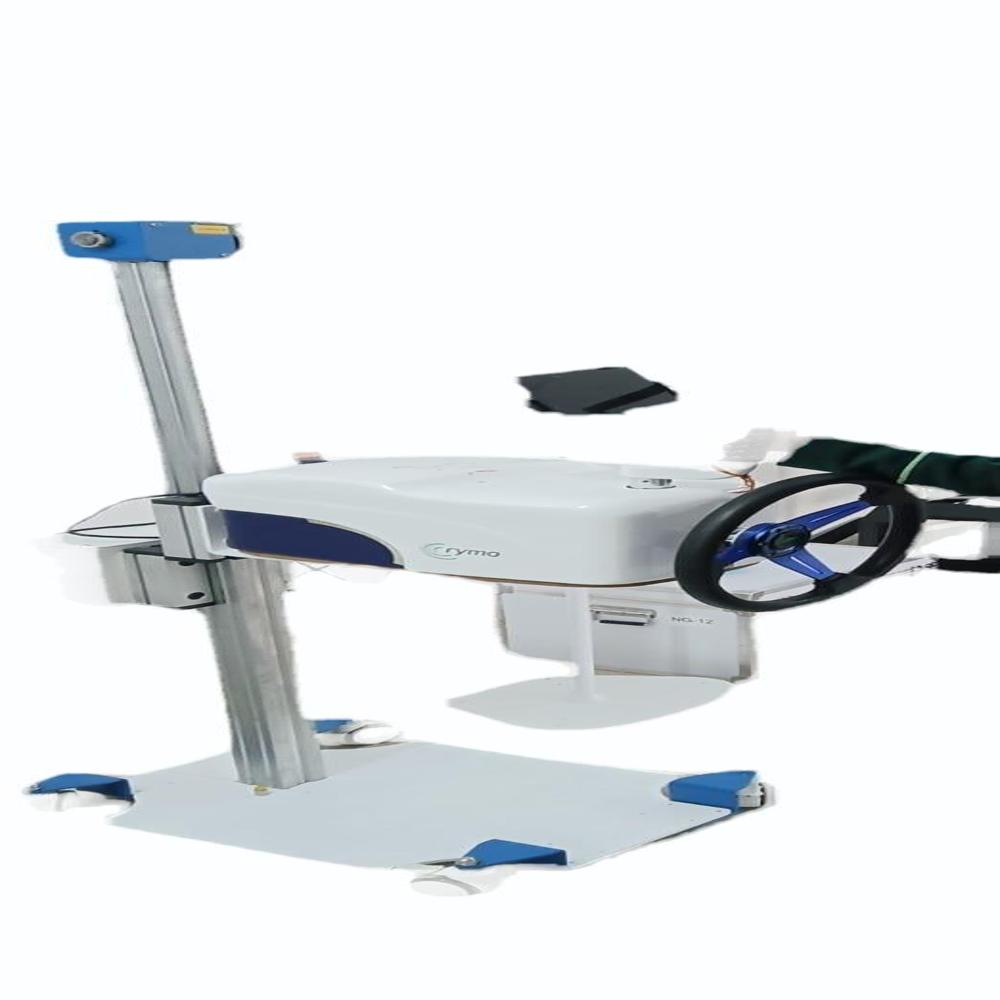
Next-Level Rehabilitation ExperienceHarness the power of advanced robotics and immersive VR with this state-of-the-art rehabilitation device. Designed for individuals recovering from injury, surgery, or neurological disorders, it supports focused therapies for both upper and lower limbs. The user-friendly interface and portable design enable effective rehabilitation sessions anywhere, promoting faster recovery and improved physical outcomes.
Reliable and Versatile DesignConstructed from durable metal and plastic, the device maintains a balance between sturdiness and lightweight mobility. Its contemporary white and blue appearance complements any clinical or home environment. The absence of wall-mounting requirements means you can set it up quickly and use it wherever needed, maximizing its versatility for patients and caregivers alike.
FAQ's of Robotic VR Rehabilitation Device:
Q: How does the Robotic VR Rehabilitation Device improve upper and lower limb strength and coordination?
A: The device uses advanced robotic technology and virtual reality simulation to create interactive exercises that target specific muscle groups. Its programs adapt in real-time to the user's progress, offering effective training that enhances muscle strength and coordination for both upper and lower limbs.
Q: What is the recommended process for using this rehabilitation device during therapy sessions?
A: Therapists or users initiate sessions by selecting suitable programs from the interface. The device provides guided instructions, using VR to engage the user in movement tasks. Users follow these activities under supervision or independently, ensuring a structured and progressive rehabilitation process.
Q: When should I consider using the device for patient recovery?
A: This device is suitable during various stages of rehabilitation, especially after acute injuries, surgeries, or for those with neurological conditions. It is ideal for early intervention to maintain mobility and during later stages to refine strength and coordination.
Q: Where can this device be used effectively?
A: Thanks to its portable design and lack of wall-mounting requirements, the device can be used in rehabilitation centers, hospitals, clinics, and even at home. Its flexibility ensures therapy can be delivered in the most convenient and comfortable environment for the user.
Q: What are the main benefits of using an advanced robotic VR rehabilitation device over traditional therapy?
A: Key benefits include engaging, gamified sessions that boost motivation, highly adaptable exercise programs, precise tracking of patient progress, and the capability to deliver consistent, personalized therapy. These factors contribute to faster, more effective recovery.
Q: How durable is the device, and what is the warranty period?
A: Constructed from robust metal and plastic materials, the device is built to withstand frequent use. It comes with a one-year warranty, providing peace of mind regarding its quality and reliability.






 Send Inquiry


 Send Inquiry


 English
 Spanish
 French
 German
 Italian
 Chinese (Simplified)
 Japanese
 Korean
 Arabic
 Portuguese