About Pneumatic Compression Therapy
Pneumatic Compression Therapy
Home Treatment is an important component ofPneumatic Compression Therapy. Treating lymphopress effectively means lifelong commitment to a regimen of care. Home therapy with thePneumatic Compression Therapyis easy and effective, saves clinic visits and increases patient compliance for better treatment results.
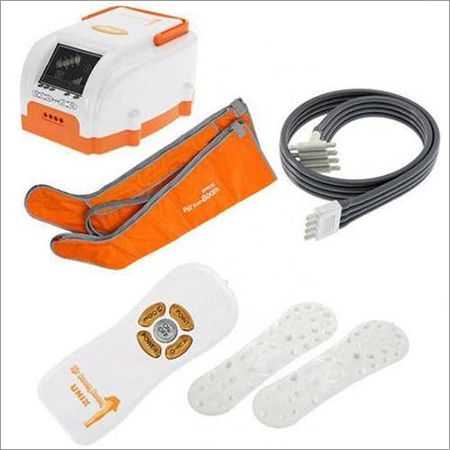
Versatile Chamber SwitchingEasily alternate between 4 or 6 compression chambers to tailor therapy to individual needs and limb sizes. This flexibility allows for customized treatment, targeting specific areas with precision, making the device suitable for a wide range of medical conditions and patient preferences.
Advanced Safety and Comfort FeaturesWith built-in automatic pressure cut-off and overheat protection, patients and caregivers can confidently operate the device. Its medical-grade ABS plastic construction and gentle, recyclable fabric cuffs guarantee comfort and safety during prolonged use. The operating noise remains below 45 dB, ensuring a peaceful environment.
Intuitive Controls and PortabilityA digital LCD display enhances user-friendliness, offering preset and adjustable timer options and easy mode selection between continuous and intermittent operation. Lightweight at 3.2 kg, with included accessories, this device is designed for effortless transport and setup across clinics, hospitals, or homecare settings.
FAQs of Pneumatic Compression Therapy:
Q: How does pneumatic compression therapy benefit users?
A: Pneumatic compression therapy helps improve blood circulation, reduces swelling linked to lymphedema, and lowers the risk of developing deep vein thrombosis. It also promotes faster post-surgical recovery by facilitating the movement of fluids and reducing edema.
Q: What is the process for selecting between 4 or 6 chamber operation?
A: The included compression cuffs are interchangeable, allowing users to choose either 4 or 6 chambers depending on the targeted area and therapy requirements. The selection process is simplejust connect the desired cuff using the supplied hoses and set your preferred mode.
Q: When should I use continuous versus intermittent mode?
A: Continuous mode is ideal for sustained, steady compression to relieve mild swelling and maintain circulation, while intermittent mode is better suited for stimulating venous return and providing more dynamic treatment. Consult your healthcare provider to determine the best mode for your condition.
Q: Where can this device be safely used?
A: This device is designed for versatile usage in clinical settings, hospitals, and homecare environments, as long as ambient temperatures are between 10C and 40C. Always ensure a flat, stable surface and follow the user manual for proper operation.
Q: How do the safety features protect users during therapy sessions?
A: The device is equipped with automatic pressure cut-off and overheat protection. These features prevent excessive pressure and overheating, ensuring patient safety during each therapy session. The digital LCD provides clear guidance and status updates throughout use.
Q: What benefits does sequential compression technology provide compared to static compression?
A: Sequential compression mimics the bodys natural muscle pump by applying graduated pressure in a sequence from the extremities towards the body, optimizing lymphatic drainage and blood flow more effectively than static compression methods.






 Send Inquiry


 Send Inquiry


 English
 Spanish
 French
 German
 Italian
 Chinese (Simplified)
 Japanese
 Korean
 Arabic
 Portuguese